Electroencephalography (EEG)
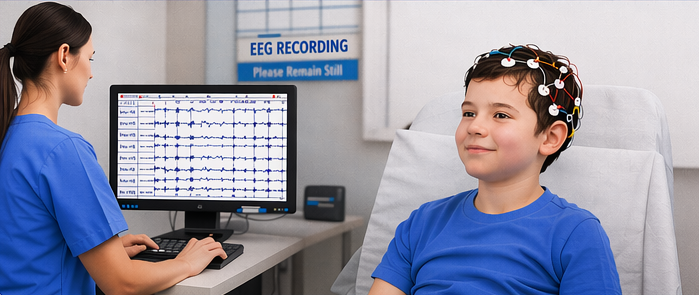
A routine EEG is a short recording of the brain’s electrical activity performed in a clinic or hospital
Performed by experienced neurophysiology scientist
Patient wears electrodes placed according to the 10–20 system (around 21 electrodes)
Recording typically lasts 20–30 minutes
Will include activation procedures (eye opening/closing, hyperventilation, light stimulation)
Evaluate seizures
Assess type of epilepsy
Evaluate seizure like events like staring spells
Ambulatory EEG
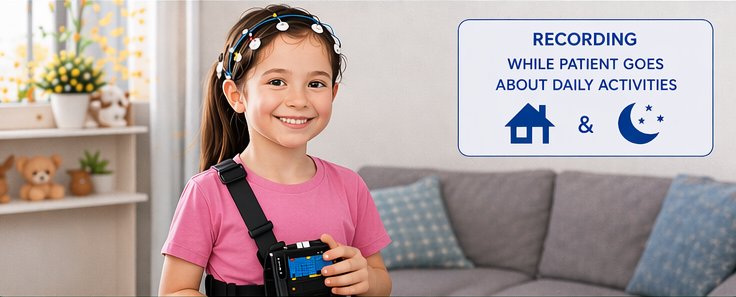
Ambulatory EEG (AEEG) is a prolonged (24-72 hours duration) brain wave recording that allows patients to be monitored while they go about their normal daily activities at home and during sleep
Wearable, lightweight EEG system designed for comfort and mobility
Continuous recording for 1–3 nights (24–72hours)
Captures brain activity during typical daily life and sleep
Would capture the seizures event which are not captured during a short EEG
Data reviewed later by a specialist (epileptologist)
Detect infrequent or “hidden” seizures
Correlate events with EEG activity
Assess seizure burden over time
Please contact the clinic for detailed information about the EEG procedure and instruction at the time of booking of EEG
Download EEG forms to get started
Q & A
General Practitioners and Paediatricians can download the EEG request form here and email or fax after filling in the details.Your child’s hair should be clean, dry, and free of products. If they have head lice, please reschedule after treatment. Before the EEG, the scientist will ask some questions, explain the procedure, and measure your child’s head to mark electrode positions. The scalp will be cleaned, and 23 electrodes applied with conductive paste and tape, possibly secured with a bandage. Your child should remain reasonably still. A video is recorded alongside the EEG, and the scientist monitors and notes any events. Activation techniques may include eye movements, deep breathing, flashing lights, or sleep (often sleep-deprived). Bring distractions like toys or a device to help keep your child calm.
A sleep-deprived EEG test is sometimes performed as it increases the chance of finding epileptic abnormalities. Before a sleep-deprived EEG test, school aged children (>5 years) will be asked to stay up as late as possible (3 hours past the normal bedtime) and to wake up at least 2 hours earlier than normal. Care should be taken and discussion with your doctor should occur if sleep deprivation is a trigger for your child’s seizure. In that case, it may be possible just to wake your child up earlier than usual on the day of the EEG test.
Yes. You are welcome to stay in the recording room during the EEG unless you feel that your child will be more comfortable without you. It is important to arrange for another adult to look after any other children while the recording is being done as they cannot stay in the room.
During setup, your child will not feel anything other than their scalp and hair being touched. The paste is easy to wash out of the hair after the test is completed. There are no side effects from an EEG. An EEG is not harmful, there are no X-rays or injections and it cannot read your thoughts. All EEG recordings and relevant portions of video are saved and kept in a secure place in Westmead Specialists/ Norwest Kids Specialists.
The test usually takes about 45 minutes but sometimes it may take longer, especially if a sleep recording is needed.
Neurologist will discuss the results with you and the report will be sent to your doctor.
EEG is completely safe and pain free for your child.
Wash your child's hair the night before.
Bring your Medicare card and the EEG request card or referral letter (if it has not already been sent in).